Tru Earthworks
LOWDHAM | JACKSONS CIVILS
Tru Earthworks Ltd was appointed by Jackson Civils to deliver the earthworks package for the Lowdham Cocker Beck Flood Alleviation Scheme.
Faced with unforeseen ground conditions and an unworkable original methodology, the team developed a technically compliant and environmentally responsible solution to keep the project progressing.
Project at a glance
- Earthworks delivery for the Lowdham Cocker Beck Flood Alleviation Scheme
- Construction of new flood defence embankments
- Excavation and management of material from the original riverbed
- Extensive compaction and air voids testing
- Management of challenging groundwater and saturated ground conditions
- Identification and excavation of two on-site borrow pits
- Selective excavation of suitable clay for embankment construction
- Moisture conditioning of clay to achieve specification
- Haul distances of up to 700 metres
- Creation and management of dedicated stockpiles for unsuitable material
- Reuse of marginal material within landscape areas
- Controlled backfilling and full reinstatement of the borrow pit
- Excavation and reinstatement of watercourses
- Backfilling behind the Flow Control Structure
- Construction of the embankment to bentonite trench level
- Elimination of the requirement for imported fill
- Avoidance of lime stabilisation, representing a saving of more than £1 million
- Collaborative delivery alongside JCE, Arcadis, the Environment Agency and ARUP
- Phases 2 and 3 contracted works completed by early August 2025
Responding to Challenging Ground Conditions
The original contract methodology assumed that material excavated from the existing riverbed could be reused directly in the construction of the new flood defence embankment.
Once excavation commenced, however, it quickly became apparent that the ground conditions differed significantly from those anticipated.
Excavated material repeatedly failed the required compaction and air voids testing, making much of it unsuitable for use within the engineered embankment. Groundwater also rose through the formation, saturating newly placed layers and further affecting the material's ability to achieve the required specification.
During excavation, the team also encountered substantial pockets of organic material, including tree roots and other unsuitable deposits. These conditions required excavation to extend both deeper and wider than originally planned.
Only a relatively small proportion of the excavated material was capable of meeting the required engineering specification. As a result, the original methodology and associated bill rates no longer reflected the works required on site.
With the original approach no longer viable, Tru Earthworks moved to a dayworks arrangement while working collaboratively with the wider project team to develop an alternative solution.
Developing an On-Site Borrow Pit Solution
One potential solution was to import compliant material from outside the site. However, this would have resulted in significant additional vehicle movements, increased environmental impact and conflicted with the planning constraints surrounding the scheme.
Tru Earthworks instead proposed sourcing suitable material from within the project boundary.
An area believed to contain higher quality clay was identified as a potential borrow pit. Initial trial holes confirmed the presence of suitable material, leading to a wider programme of trial pits to assess the quality, consistency and availability of the clay.
The borrow pit subsequently became the primary source of material for the new embankment.
Although suitable clay was available, the material remained highly variable. The earthworks team therefore had to excavate selectively, identifying and separating material capable of meeting the required engineering specification.
Moisture content also required careful management. During periods of warmer weather, material frequently required moisture conditioning before it could be placed and compacted successfully.
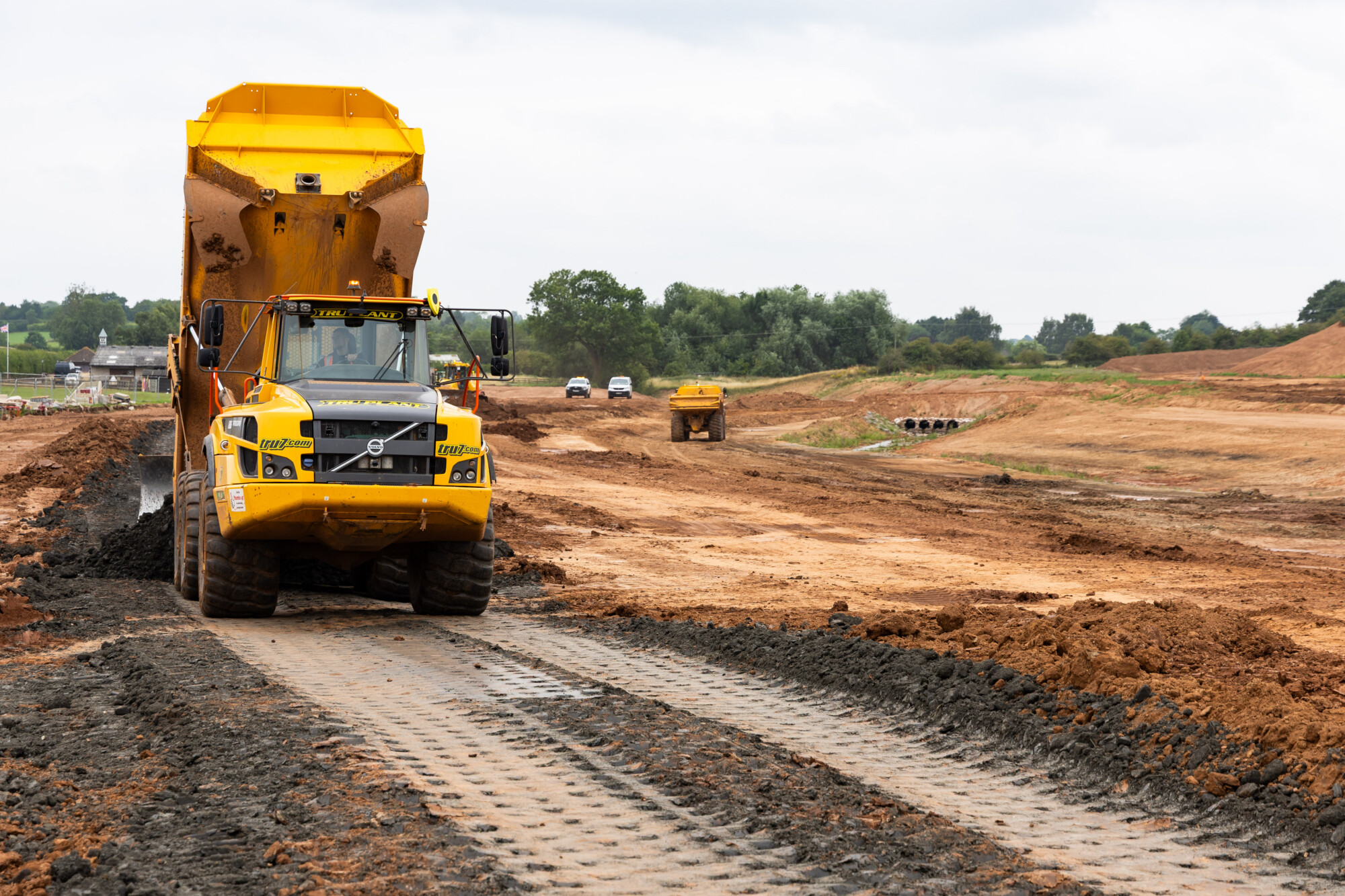
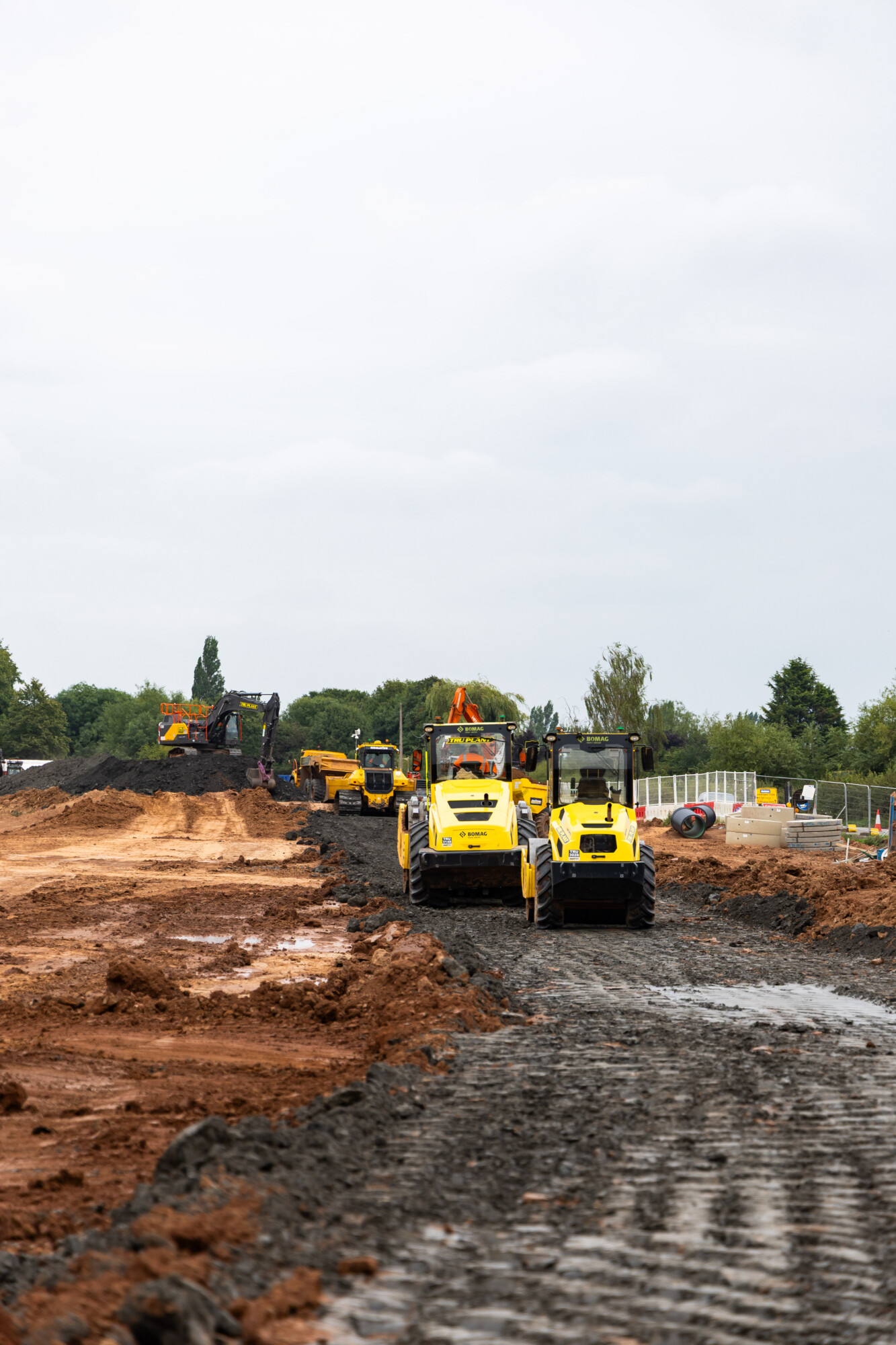
Haul distances of up to 700 metres between the borrow pit and placement areas also required additional plant, carefully managed haul routes and close coordination between excavation, transport, placement and testing operations.
The first borrow pit had initially been expected to provide approximately 40,000m³ of suitable material. Actual yields proved lower than anticipated, meaning an additional source was required to maintain progress. A second borrow pit was subsequently identified and excavated, providing further compliant material for the embankment works.
Maximising the Use of Site-Won Material
Material efficiency became a key consideration throughout the revised programme.
A dedicated stockpile was created for material and constructed layers that failed to achieve specification. At the same time, landscape areas requiring fill were stripped earlier than originally planned, allowing marginal material to be transported directly to suitable locations rather than being unnecessarily stockpiled, handled and moved again later.
This sequencing reduced double handling while ensuring that material unsuitable for engineered sections of the flood defence could still be used productively elsewhere on the project.
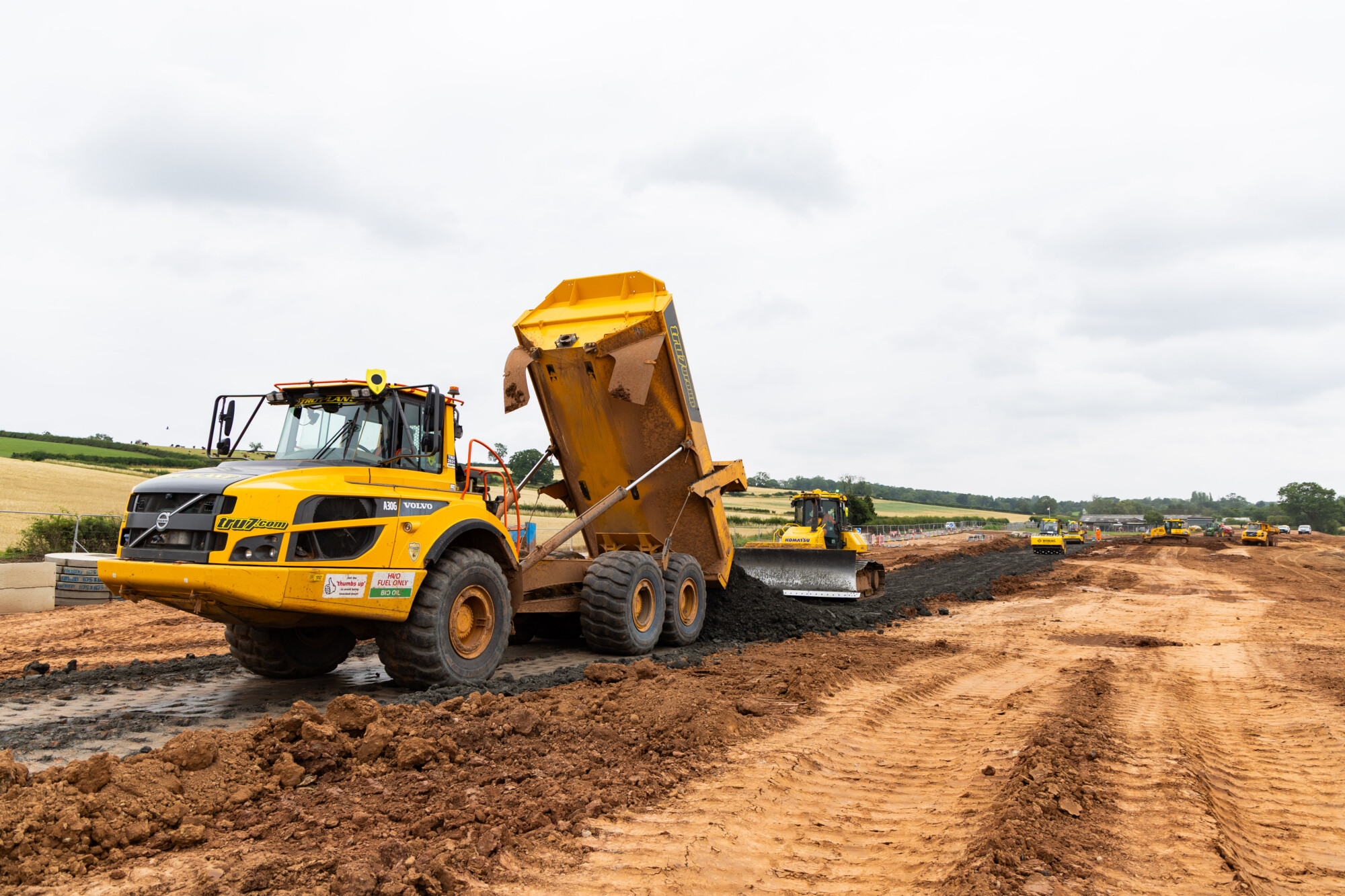
Once the primary borrow pit reached its final excavation depth, the accumulated unsuitable material was reused to backfill the excavation in controlled layers.
The completed area was then reinstated using HB topsoil, returning the ground to the required finished condition.
Through this approach, site-won material was retained and reused wherever technically appropriate, minimising waste and substantially reducing the requirement for materials to be transported either onto or away from the site.
Maintaining Quality and Compliance
Given the highly variable nature of the available clay, testing remained central to the success of the revised methodology.
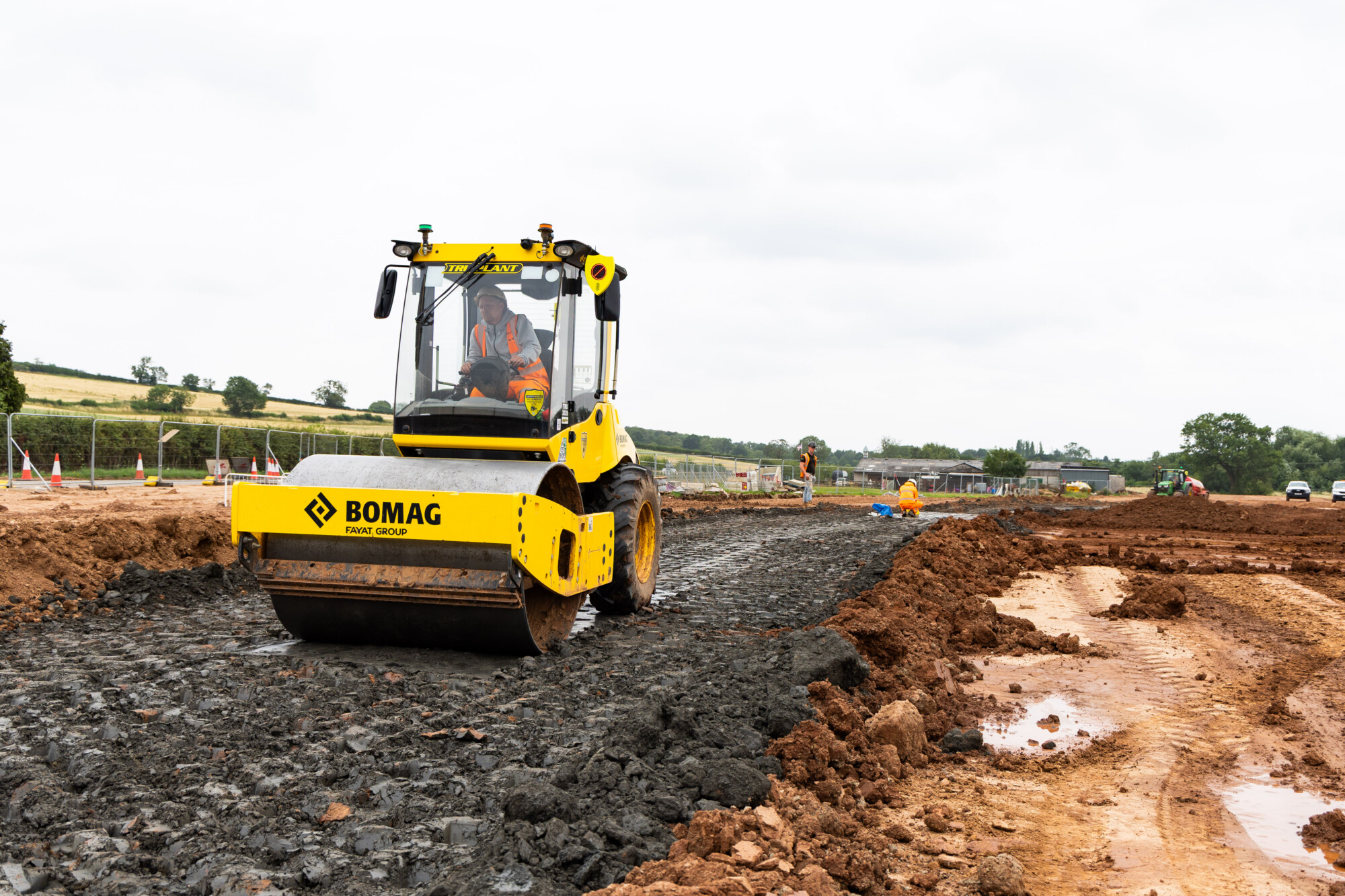
Selective excavation, moisture conditioning, controlled layer placement and rigorous testing were used to ensure that each section of the embankment achieved the required specification before subsequent layers could proceed.
This quality-led approach allowed Tru Earthworks to adapt production according to the material encountered while maintaining the technical integrity of the completed flood defence structure.
Despite the significant changes to the original scope and methodology, all available works were completed to the required standard, allowing follow-on contractors to progress without unnecessary delay.
Collaborative Project Delivery
The changing ground conditions and revised construction methodology introduced a number of technical, operational and commercial challenges.
Throughout the project, Tru Earthworks maintained a collaborative and transparent working relationship with JCE, Arcadis, the Environment Agency and ARUP.
Close communication between the respective teams allowed ground conditions, testing results and engineering challenges to be reviewed as they emerged, helping technical decisions to be made efficiently and enabling progress to continue wherever possible.
This collaborative approach was particularly important as the project evolved from its original cut and fill methodology into a more complex material sourcing, conditioning and testing operation.
Environmental and Commercial Benefits
The revised methodology ultimately delivered significant environmental and commercial benefits to the project.
By identifying suitable clay within the site boundary, Tru Earthworks eliminated the need to import large quantities of fill material. This substantially reduced the number of heavy goods vehicle movements that would otherwise have been required, together with the associated fuel consumption, emissions and disruption to the surrounding area.
The approach also avoided the requirement to stabilise unsuitable material using lime.
Avoiding lime stabilisation alone represented a project saving of more than £1 million, while the extensive reuse of site-won materials provided further efficiencies by reducing disposal, importation and handling requirements.
The solution therefore delivered not only a technically compliant embankment, but an approach that was more environmentally responsible and commercially efficient.
Project Completion
By early August 2025, Tru Earthworks had completed the contracted works associated with Phases 2 and 3 of the scheme.
Completed works included:
- Construction of the flood embankment to bentonite trench level
- Excavation and reinstatement of watercourses
- Backfilling behind the Flow Control Structure
- Excavation and management of the borrow pits
- Full backfilling and reinstatement of the primary borrow pit
- Management and reuse of unsuitable and marginal materials
The Tru Earthworks team subsequently returned to the project to complete the remaining final grids.
Project Outcome
The Lowdham Cocker Beck Flood Alleviation Scheme demonstrates Tru Earthworks' ability to respond effectively when site conditions differ significantly from those anticipated at tender stage.
Faced with unsuitable excavated material, high groundwater levels, variable clay conditions and the failure of the original construction methodology, the team developed and delivered a practical alternative based around the intelligent reuse of materials already available within the site.
Through selective excavation, moisture conditioning, rigorous testing and carefully coordinated material movements, Tru Earthworks delivered compliant earthworks while avoiding the requirement for imported fill and substantially reducing the environmental impact of the project.
The revised approach also generated considerable commercial value, including a saving of more than £1 million through the avoidance of lime stabilisation.
Working collaboratively with the wider project team, Tru Earthworks provided a technically robust, environmentally responsible and cost-effective solution that supported the successful progression of an important flood alleviation scheme for the Lowdham community.