Tru Earthworks
Corby | ECL Civils
Tru Earthworks was appointed by ECL Civils to deliver a significant earthworks package as part of a major development in Corby.
The £2.6 million contract comprised extensive topsoil management, cut and fill operations, surcharge removal, the reinstatement of a historic borrow pit, and works carried out in accordance with strict ecological and geotechnical requirements. The project was initially programmed for completion over a 22-week period.
Project at a glance
- Topsoil strip and stockpile: 125,000m³
- Cutting to platforms, roads and ponds: 605,000m³
- Filling to platforms and roads: 515,000m³
- Filling to historic borrow pit: 80,000m³
- Topsoil placed to mounds on plots: 92,000m³
- Overall site area: 515,000m²
- Average daily production: 8,750m³ across three teams
- Programme duration: 17 weeks
- Project value: £2.6 million
- Topsoil was relocated across the site in 4,000 to 6,000m³ parcels, with locations marked and managed using a GPS model.
- Tru Earthworks was responsible for testing and recording in accordance with Series 600 of the Specification for Highway Works.
- Two testing engineers were based on site.
- Clay surcharge stockpiles were removed and cut to the required design elevation, with surplus material used to reinstate the designed public open space levels.
- Unsuitable fill, including rocks greater than 300mm in diameter, was excavated and placed within the borrow pit public open space area.
Key Quantities and Scope
The project involved approximately:
- 500,000m² of topsoil stripping, equating to around 123,000m³
- 600,000m³ of clay earthworks
- Topsoil relocation in 4,000 to 6,000m³ parcels, managed using GPS-guided placement
- Cut and fill operations to form development platforms and infrastructure corridors
- Removal of existing clay surcharge and reduction to the required design levels
- Reinstatement of a historic borrow pit using surplus surcharge clay and unsuitable material
- Management of unsuitable material, including rock exceeding 300mm, within designated public open space areas
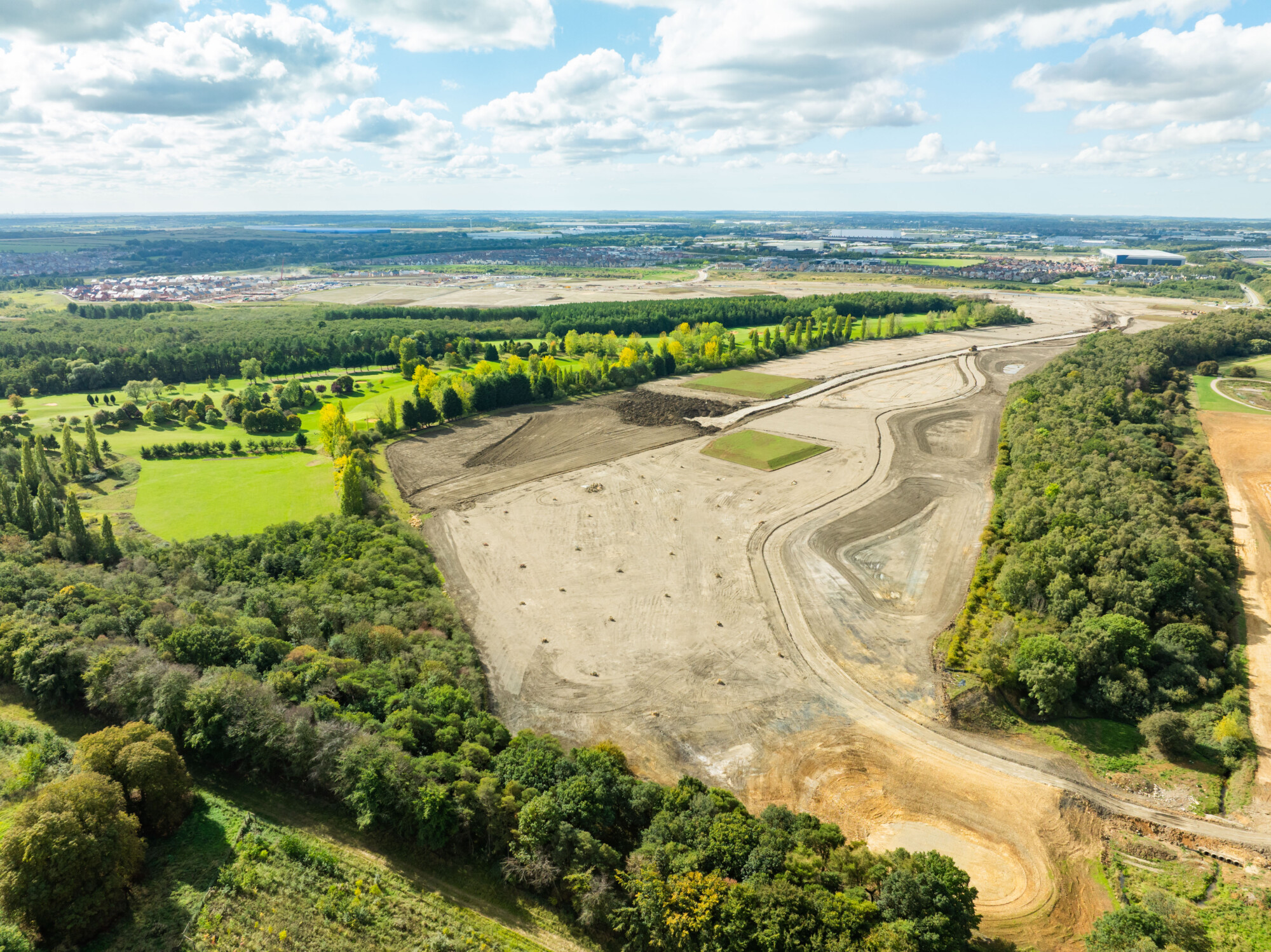
The works began with the stripping of topsoil from previously undeveloped fields. Each area was subject to ecological approval before stripping could commence, with the recovered material stockpiled and retained for reuse across the development.
Cut and fill operations then reshaped the site to the required design elevations, with material supplemented where necessary using clay recovered from the existing surcharge stockpiles.
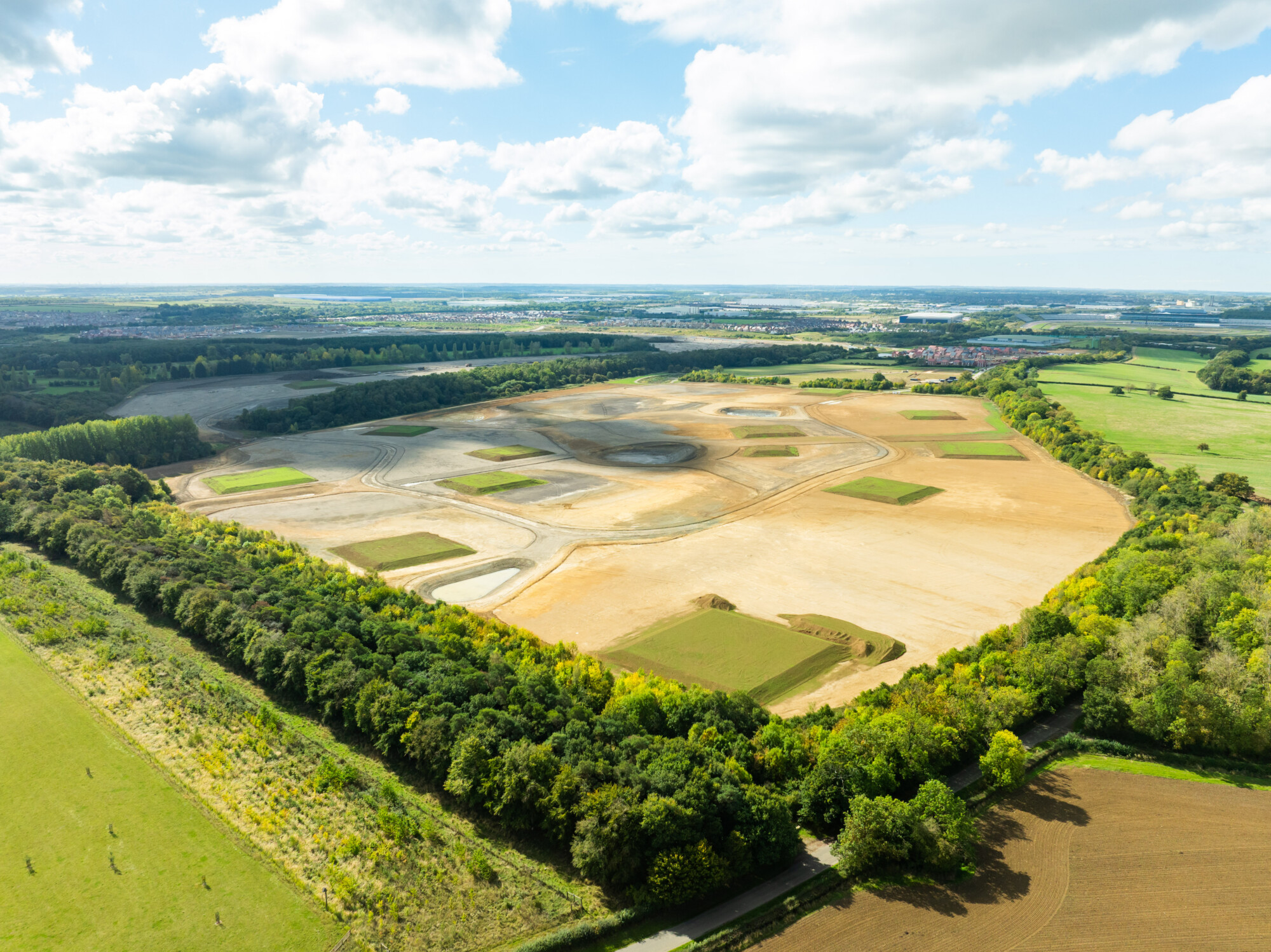
Remaining clay and other suitable materials were used to reinstate the historic borrow pit, transforming the area into land suitable for future public open space. This material management strategy helped minimise unnecessary disposal, reduce double handling and maximise the value of material already available on site.
Plant and Resources
To maintain production across the extensive site, Tru Earthworks deployed a substantial fleet of heavy earthmoving equipment, including:
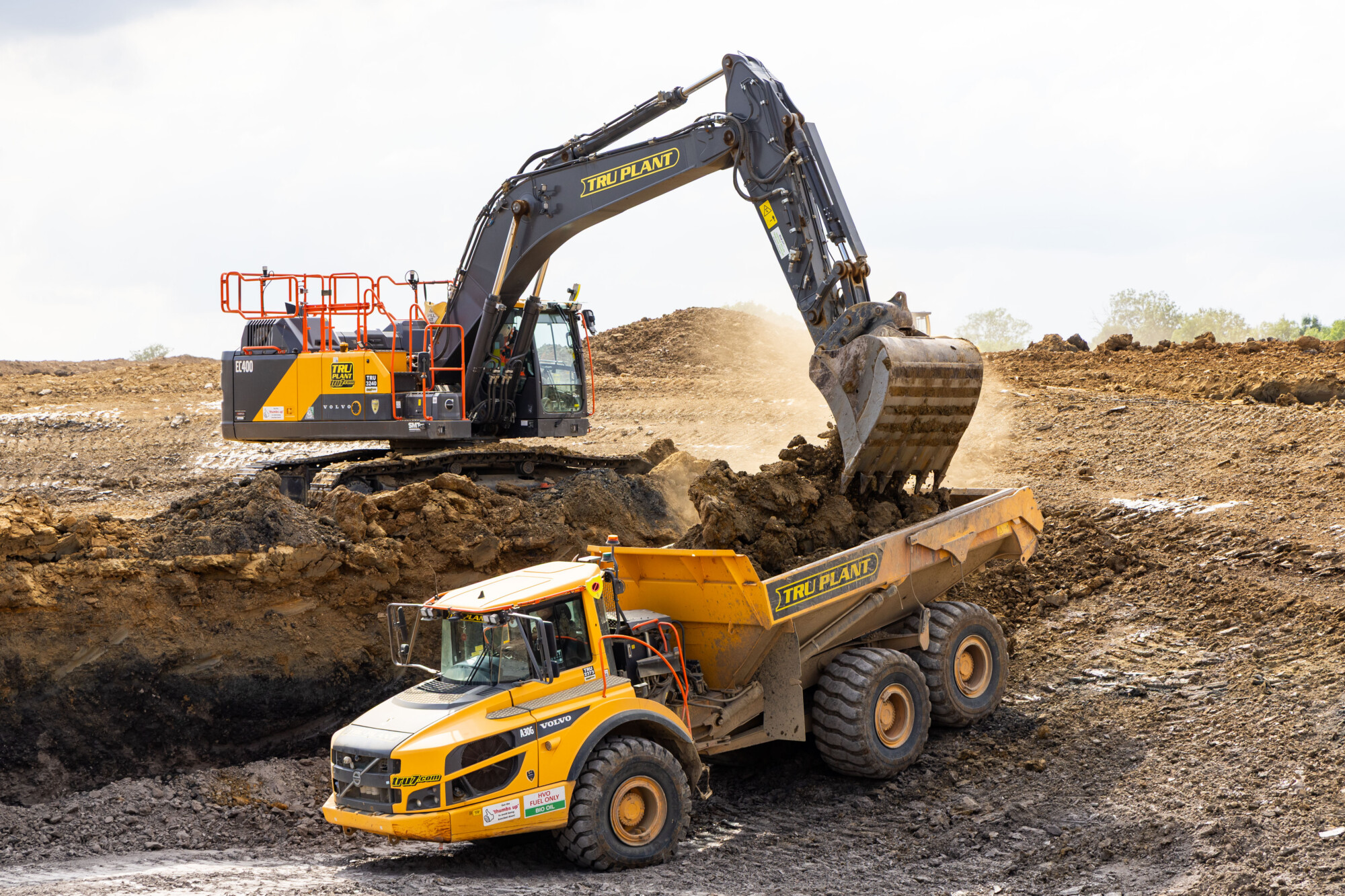
- Two 40-tonne excavators
- One 60-tonne excavator
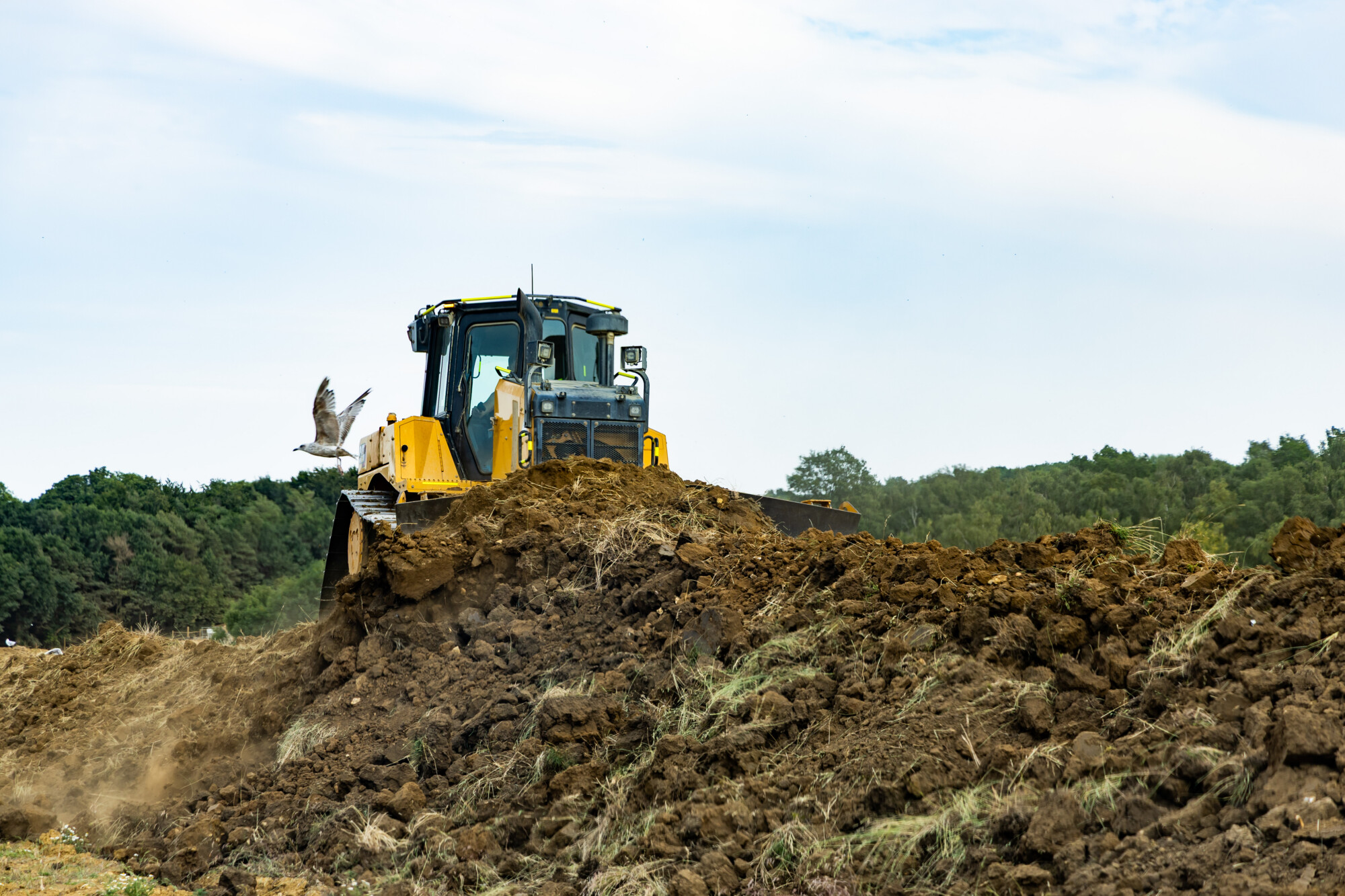
- Five D6 dozers
- Two water carts
- Three 16-tonne rollers
- Twelve articulated dump trucks ranging from 30 to 45 tonnes
The combination of excavation, haulage, grading and compaction equipment enabled multiple earthworks operations to progress concurrently across the development.
Ecological and Geotechnical Challenges
Several operational and regulatory requirements influenced the delivery strategy throughout the project.
Ecological Constraints
Ecologists provided a 48-hour working window following the approval of individual areas for topsoil removal. If stripping was not completed within this period, the area required further inspection before works could recommence.
This required close coordination between the ecological teams and Tru Earthworks' site management, ensuring plant and personnel could be mobilised quickly following each approval.
Geotechnical Testing
The considerable volume of clay being placed required continuous testing to ensure the completed earthworks achieved the required specification.
Three soil technicians, supported by assistants, worked on site for approximately ten hours each day to maintain the necessary testing and recording regime.
Testing capacity, moisture conditioning and compaction requirements meant that daily placement was typically controlled to between 6,000 and 7,000m³. This aligned with the available roller capacity and allowed the team to maintain consistent compaction and quality standards rather than prioritising volume at the expense of compliance.
Water and Moisture Management
Water management was another important consideration. Water carts were required both for dust suppression along heavily trafficked haul roads and for moisture conditioning within fill areas.
The site team continually monitored conditions to ensure water resources were directed where they were most effective while maintaining both productivity and the required material characteristics.
Efficient Material Management
A key focus throughout the project was maximising the use of materials already available on site.
Material considered unsuitable for development platforms, roads or other structural areas was assessed for alternative use within the future public open space. Where appropriate, this material was incorporated into the landscape design, improving drainage while avoiding unnecessary off-site disposal.
The borrow pit was also carefully managed. Although the original bill allowed for approximately 100,000m³ of material to be placed within the area, the completed design required only around 60,000m³.
Topsoil operations were similarly sequenced to minimise handling. Rather than stripping and stockpiling the entire site before commencing the underlying earthworks, Tru Earthworks coordinated stripping, earthmoving and reinstatement activities progressively.
This reduced unnecessary material movements, plant hours and fuel consumption while contributing to a shorter overall programme.
Commercial Management
The works were delivered under a fixed-price contract, making accurate pre-contract quantity verification particularly important.
Tru Earthworks undertook a detailed review of earthworks quantities before commencing the project, providing greater commercial certainty and allowing resources, production requirements and material movements to be planned effectively from the outset.
Careful quantity management remained important throughout the works, particularly as ECL Civils was also operating under a fixed-price arrangement with Urban & Civic.
Project Outcome
The original programme allowed 22 weeks for completion. Despite a substantial amount of additional instructed work being incorporated during the contract, Tru Earthworks completed the project in 17 weeks, five weeks ahead of programme.
Early completion was achieved through efficient sequencing, effective material management, coordinated testing and proactive communication between the project teams.
Key outcomes included:
- Completion five weeks ahead of the original programme
- Full compliance with ecological and geotechnical requirements
- Efficient reuse of both suitable and unsuitable material across the development
- Reduced double handling, fuel consumption and plant hours
- Minimised requirement for off-site muck away
- Preservation of valuable disposal airspace
- Successful reinstatement of the historic borrow pit to create future public open space
- Significant commercial benefit through efficient management of on-site materials
- Strong collaborative working relationships between Tru Earthworks, ECL Civils and wider project stakeholders
The project demonstrated Tru Earthworks' ability to deliver complex, high-volume earthworks programmes while balancing production, environmental controls, technical compliance and commercial performance.