Construction Plant Types and Their Uses: A Practical Guide
By Tru7 SEO | 8 September 2026
Construction projects rely on different machines for different tasks. Excavating foundations, moving earth, compacting sub-base, lifting materials and processing demolition arisings all require plant with the right configuration, capacity and operating characteristics. Understanding the main construction plant types makes it easier to narrow down the equipment that suits the work before you request availability or pricing. Tru Plant supplies machinery for construction, demolition, infrastructure, earthworks and commercial projects, with a broad range of equipment available for different site requirements.
What Is Construction Plant?
Construction plant is the machinery and heavy equipment used to carry out construction activities such as excavation, material movement, lifting, grading, compaction and processing. In practice, the term covers a wide range of equipment, from compact excavators and site dumpers to large dump trucks, dozers, telehandlers, rollers and crushers. The important point is that each machine is designed around a particular type of work. Choosing a suitable plant therefore starts with the task itself, followed by the limitations and conditions of the site.
Construction Plant Types at a Glance
| Plant type | Main function | Common applications |
|---|---|---|
| Excavator or digger | Digging, loading, lifting and attachments. | Foundations, trenches, drainage, demolition and earthworks |
| Site dumper | Moving smaller loads around a site. | Groundworks, landscaping and restricted-access material movement. |
| Dump truck | Moving high volumes along haul routes. | Bulk earthworks, infrastructure, quarrying and major site clearance. |
| Dozer | Pushing, spreading and grading material. | Site preparation, platform construction and land clearance. |
| Telehandler | Lifting and positioning materials. | Pallet movement, loading and general material handling. |
| Roller | Compacting soil and construction layers. | Roads, paths, hardstanding, sub-bases and earthworks. |
| Loading shovel | Loading and stockpile management. | Aggregates, recycling, yards and bulk material handling. |
| Crusher or screener | Processing and separating material. | Demolition arisings, aggregate preparation and material recovery |
This table is a broad starting point. The exact model and specification still need to be selected around the task, access, ground conditions, required capacity and manufacturer’s operating limits.
Excavators and Diggers
Excavators are among the most versatile types of construction plant. A rotating upper structure, boom, dipper arm and compatible attachment allow the machine to dig below ground level, load material and work across a wide operating area. Compact machines can suit restricted access and smaller excavations, while larger tracked excavators are used for heavier digging, bulk earthmoving and loading. Wheeled excavators are useful where mobility across firm surfaces is important, and long-reach machines are designed for work that requires additional reach or depth.
Machine selection should consider required dig depth, reach, tail swing, access width, ground conditions, attachment, expected spoil volume and any lifting duty. Visibility and clearance also matter, particularly on busy or restricted sites. For projects requiring excavation equipment, browse Tru Plant’s digger and excavator hire range and compare compact, tracked, wheeled and specialist options against the actual project requirements.
Dumpers and Dump Trucks
Dumpers and dump trucks both move material, but they are designed for different scales of work. A site dumper is generally smaller and uses a skip to carry soil, stone, concrete or waste around a site. Straight-tip, swivel-tip, high-tip and tracked configurations can suit different loading and discharge conditions, particularly on compact or restricted sites. For these applications, the dumper hire range provides options for moving smaller loads efficiently around site.
Dump trucks are built for higher-volume earthmoving. Articulated models are commonly used on rough ground and longer haul routes, often working with large excavators or loading shovels. When the project involves sustained bulk movement, compare the available dump truck hire options against haul distance, loading plant, ground conditions, gradients, turning space and tipping arrangements.
Dozers
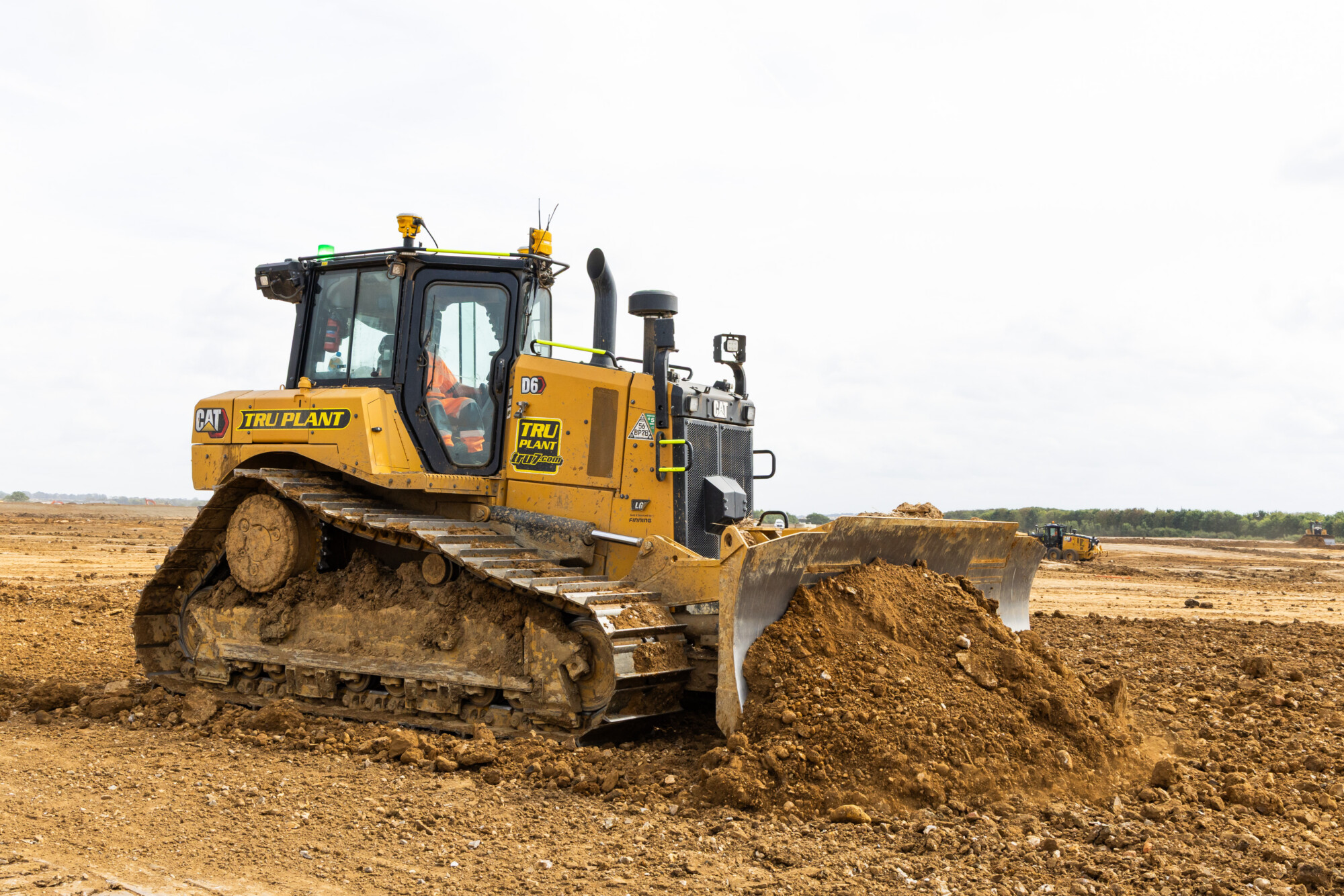
A Tru Plant CAT D6 dozer at work on an active earthworks site.
Dozers use a front blade to push, spread and shape material. Their tracked undercarriage provides traction and distributes the machine’s weight across the ground, making them useful for demanding earthmoving and site-preparation work. Typical applications include stripping and clearing sites, pushing fill, forming platforms, maintaining haul routes and grading large areas. Some machines use machine-control technology to support accurate grading, but the capability depends on the model, setup and project requirements. For earthmoving and grading work, view the dozer hire range.
Telehandlers
A telehandler uses a telescopic boom to lift, carry and position materials. It combines off-road mobility with forward reach, making it useful for moving pallets, blocks, pipework and other materials around construction sites. Forks are common, although compatible approved attachments can extend the machine’s use. The main selection factors include load weight, lift height, forward reach, attachment, ground conditions and available working space.
A telehandler should not be treated as a universal replacement for a crane, access platform or other lifting equipment. The lifting operation must be planned around the load, machine, attachment and site conditions. Explore the telehandler hire range when lift height and forward reach are central to the task.
Rollers
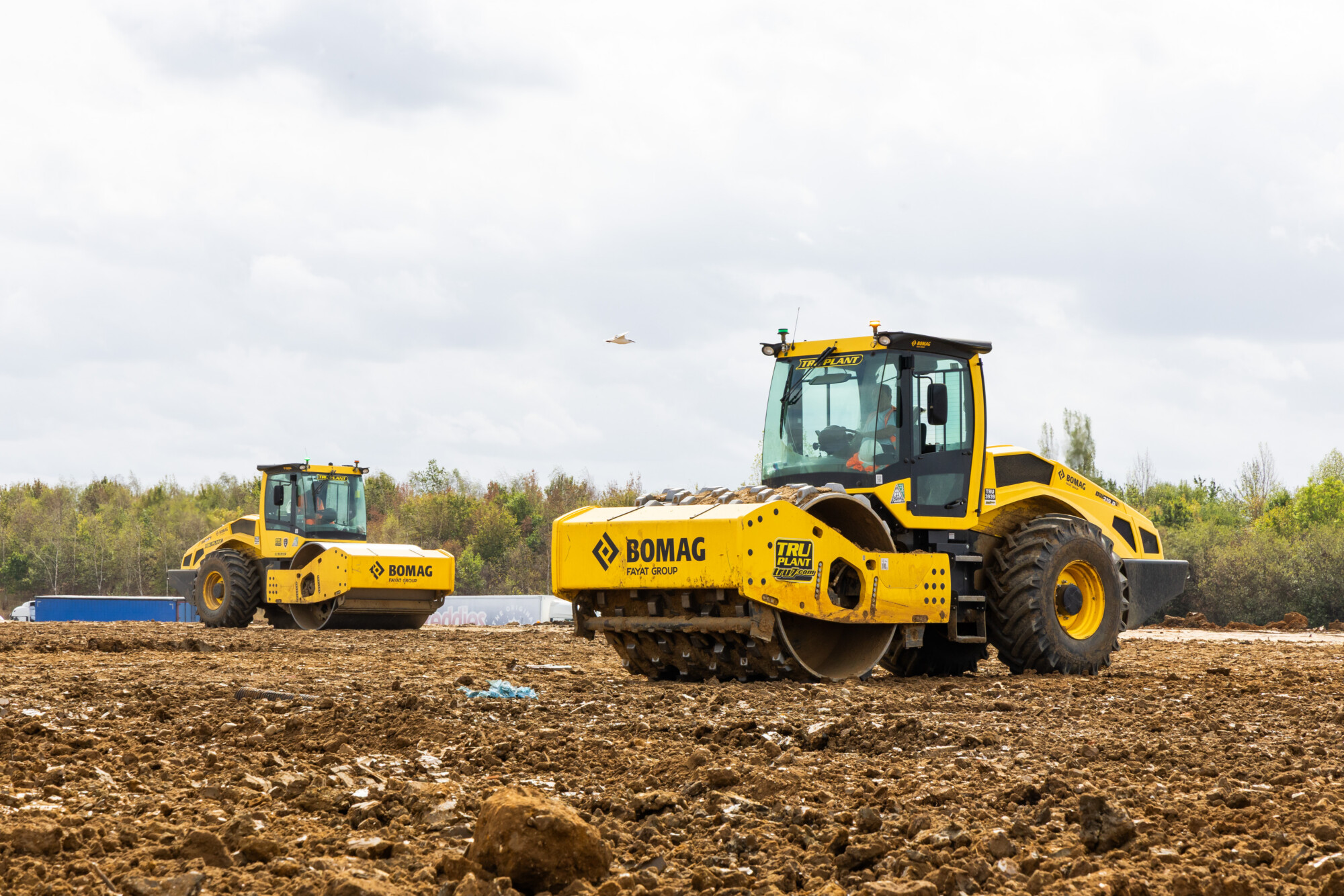
Tru Plant Bomag rollers compacting ground on the same site.
Rollers compact soil, stone, asphalt and other construction layers. Correct compaction helps create stable working platforms, roads, paths, hardstanding and sub-bases. Different roller types and sizes suit different materials, layer thicknesses and working areas. Selection should consider the material being compacted, required finish, working width, vibration restrictions and available space. A compact roller may suit paths and restricted areas, while larger ride-on equipment may be required for platforms or extensive earthworks. Browse the roller hire options for compact and larger-site applications.
Loading Shovels
Loading shovels, also known as wheel loaders, are designed to scoop, carry and load loose material. They are widely used in aggregate yards, recycling facilities, construction sites and earthworks operations where material needs to move repeatedly between stockpiles, processing equipment and transport vehicles. Bucket capacity, loading height, travel distance, surface conditions and manoeuvring space all influence the correct choice. See the loading shovel hire range for material-handling applications.
Crushers and Screeners
Crushers reduce larger pieces of material into smaller sizes, while screeners separate material into defined fractions according to the machine setup. These machines are commonly used in demolition, recycling, quarrying and aggregate preparation. On suitable projects, processing material on site may reduce the amount that needs to be transported and may produce material for reuse, subject to testing, specification and environmental requirements. The correct setup depends on the feed material, required output, contamination, access and production target. Explore Tru Plant’s crusher and screener hire options for material-processing projects.
Supporting Plant and Equipment
Construction sites often need supporting equipment alongside the main earthmoving, lifting and compaction fleet. Tractors and trailers can move equipment and materials across suitable sites. UTVs can support people and tools. Bowsers, lighting towers and dust-suppression equipment can help maintain site operations and site controls. Attachments can also change the task a base machine performs, but compatibility and the effect on capacity, stability and visibility must be checked before work begins. The full plant and equipment hire range brings these supporting categories together with the main plant fleet.
How to Choose the Right Construction Plant
Machine selection should start with the work that needs to be completed, followed by the limitations and conditions of the site. A useful plant-hire enquiry should cover the following points:
- Define the task. Confirm whether the machine needs to dig, lift, push, compact, load, transport or process material.
- Check access and working space. Record gate widths, overhead restrictions, turning areas, tail-swing clearance and delivery access.
- Understand the ground conditions. Consider soft areas, gradients, bearing capacity, finished surfaces and whether a tracked or wheeled plant is more appropriate.
- Confirm capacity and reach. Identify load weights, dig depth, lift height, forward reach, haul distance and expected production requirements.
- Select attachments carefully. Check compatibility, couplers, hydraulic requirements and any effect on lifting or operating capacity.
- Plan for competent operation. Operators should be adequately trained and competent for the specific machine and work being undertaken.
- Plan transport and site movement. Confirm delivery arrangements, traffic routes, pedestrian segregation, loading areas and safe tipping or operating zones.
The final equipment choice should be checked against the project risk controls, the exact machine specification and the manufacturer’s instructions. When several machine types are required, it is also important to consider how they will work together so loading rates, haul routes and working areas remain practical.
Construction Plant Working Together: A Tru7 Example
The EA2 Project in Friston is a useful example of different types of construction plant working as one system rather than isolated machines on their own. This earthwork project involved creating the required levels, with approximately 150,000m³ of cut and fill, together with the stripping and management of around 50,000m³ of topsoil. Tru7 used a combination of two 40 tonne excavators, one 36 tonne excavator, eight articulated dump trucks and five bulldozers along with numerous rollers to support excavation, cut and fill, stockpiling, material movement, compaction and trimming.
That combination demonstrates why plant selection should consider the wider operation. An excavator needs suitable haulage capacity to keep material moving, dump trucks need safe and productive routes, and dozers and rollers need the right working space and material conditions. Browse more Tru7 case studies to see how different plant categories are used together on live projects.
Speak to a Plant Hire Specialist
Understanding the main plant categories is the first step. The final choice should be based on the exact project, machine specification, attachment, operating arrangement and site conditions. Providing clear information about the task, access, ground, load, hire period and delivery requirements will help narrow down suitable options. Browse the full plant and equipment hire range or contact the Tru Plant team to discuss machinery, operated hire and availability.
Browse the Tru Plant Range Or Call 01473 612761
Frequently Asked Questions
What are the main types of construction plant?
Common types include excavators, dumpers, dump trucks, dozers, telehandlers, rollers, loading shovels, crushers and screeners. Supporting equipment can include tractors, bowsers, lighting towers, UTVs, dust-suppression equipment and attachments.
What is the difference between a dumper and a dump truck?
A site dumper is generally smaller and suited to moving material around compact or restricted sites. A dump truck is designed for carrying larger volumes over longer haul routes on major earthworks, quarrying or infrastructure projects.
Which construction plant is used for digging foundations?
Excavators and diggers are commonly used for foundations and trenches. The suitable size and configuration depend on dig depth, access, ground conditions, spoil volume, lifting requirements and available working space.
Do construction plant operators need training?
Yes. Operators should be adequately trained and competent to use the specific machine. Site arrangements should also follow the project’s risk controls, traffic-management plan and manufacturer instructions.
Can construction machines use different attachments?
Many machines can use approved attachments to perform additional tasks. Compatibility, capacity, couplers, hydraulic requirements and manufacturer instructions must be checked before use.