How to Choose an Earthworks Contractor for a Commercial Project
By Tru7 SEO | 8 September 2026
Choosing the right earthworks contractor can influence far more than the first phase of a commercial project. The quality of the earthworks package affects access, material movement, formation levels, programme interfaces and how efficiently later construction can begin. A contractor therefore needs more than a competitive price. They need the experience, people, plant and organisational capability to deliver the exact scope of work required.
If your project requires site clearance, bulk muck shifting, cut and fill, soil stabilisation or remediation, the selection process should test both capability and capacity. Tru Earthworks supports commercial, residential, reservoir, sports pitch and infrastructure projects, but the same evaluation principles apply whichever earthworks contractor you are considering.
Earthworks Contractor Selection at a Glance
How do you choose an earthworks contractor for a commercial project? Choose an earthworks contractor by checking experience on comparable projects, plant and operator capacity, health and safety capability, understanding of ground conditions and material movement, programme and methodology, tender clarity, insurance and evidence from previous work. The strongest appointment is the contractor that can demonstrate both capability and capacity for your specific project.
When comparing earthworks contractors, review the areas below before making an appointment:
| Assessment area | What to check | Why it matters |
|---|---|---|
| Relevant experience | Comparable project type, scale, ground conditions and earthworks scope | Shows whether the contractor has dealt with similar delivery risks before |
| Capacity | Available supervisors, operators, plant and mobilisation dates | A capable contractor still needs enough resources for your programme |
| Health and safety | Planning, competence, supervision and project coordination arrangements | Commercial earthworks involve significant plant, excavation and interface risks |
| Ground and materials | Understanding of cut and fill, spoil, imported material, contamination and stabilisation | Material assumptions can have a major effect on programme and cost |
| Methodology | Haul routes, sequencing, loading areas, stockpiles and working zones | The proposed method should fit the site and wider construction programme |
| Tender clarity | Inclusions, exclusions, quantities, assumptions and variation process | Two prices are only comparable if they cover the same scope |
| Project evidence | Case studies, references and measurable previous work | Evidence is more useful than broad claims of capability |
In practical terms, the best earthworks contractor is not simply the business with the lowest tender or the largest fleet. It is the contractor that can demonstrate relevant experience, provide the right resources when required and explain clearly how the work will be delivered.
Start With Relevant Commercial Earthworks Experience
General construction experience is useful, but commercial earthworks are highly dependent on scale, site conditions and material movement. A contractor that has completed projects with similar earthworks volumes, haul distances, access constraints and ground conditions is easier to assess than one relying on broad experience alone.
Ask for recent examples that resemble your project. A warehouse platform, housing development, reservoir, infrastructure scheme and brownfield redevelopment can all involve earthmoving, but the operational challenges may be very different. Useful evidence should explain what the contractor actually delivered, not simply name the client or show photographs of machines on site.
Look for measurable scope where possible: the approximate volume moved, duration of the earthworks programme, types of material handled, whether cut and fill was required, the plant used and any unusual constraints. References from clients or principal contractors can add further confidence when the proposed package is large or programme critical.
Check Plant, Operator and Delivery Capacity
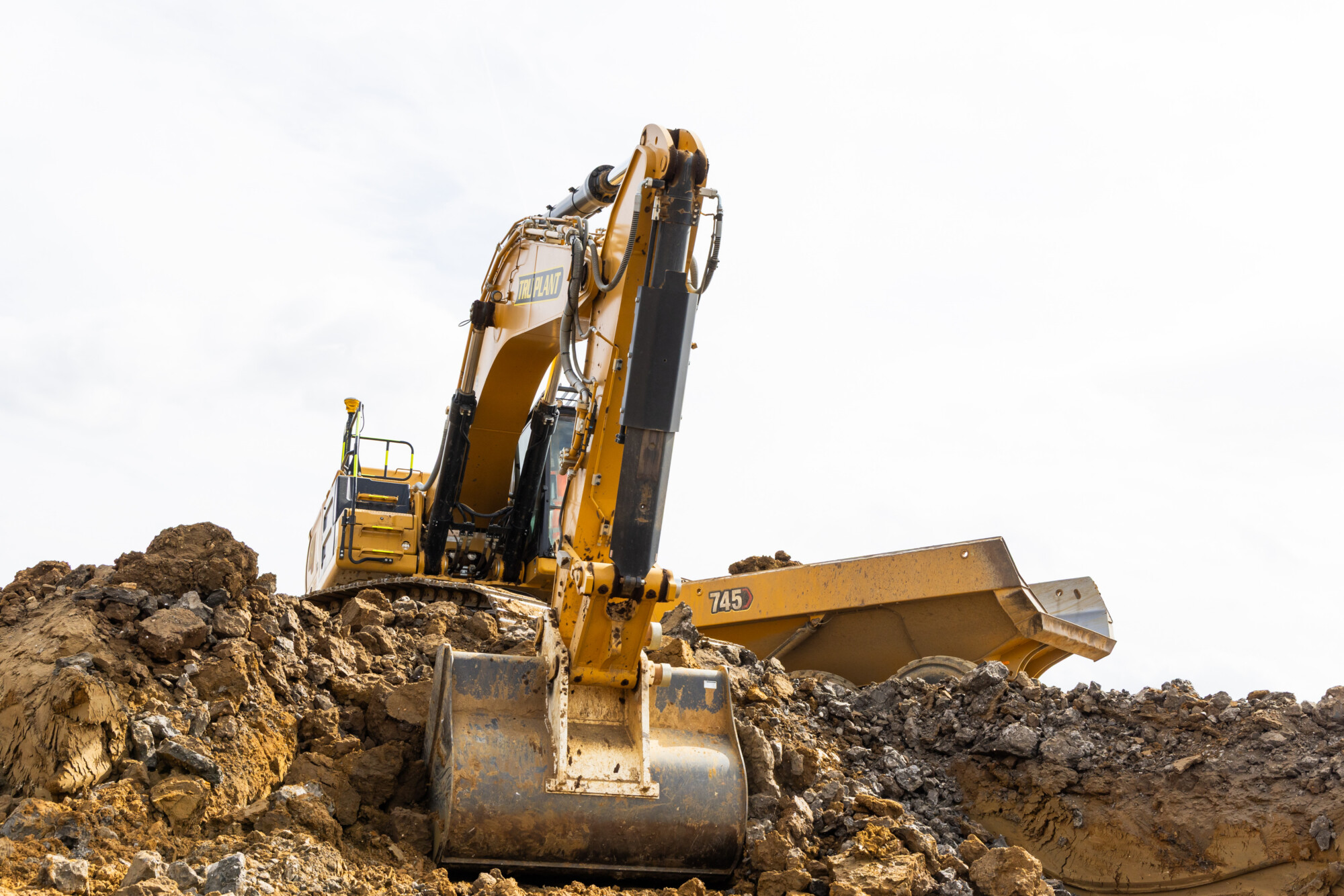
Commercial earthworks contractors should be assessed on relevant experience, available plant and operators, methodology, safety and capacity to meet the project programme.
Earthworks production depends on matching plant and people to the task. An excavator may load material efficiently, but the wider operation can still be restricted if there are too few dump trucks, haul routes are poorly planned, or compaction resources cannot keep pace with fill placement.
Review whether the contractor can provide the combination of excavators, dozers, dump trucks, rollers and other equipment the project is likely to need. On larger programmes, access to a wider fleet can make it easier to adjust the operation as phases and quantities change. Tru Earthworks works with a modern fleet supported by Tru Plant, including excavators, dump trucks, dozers and compaction equipment.
Fleet size on its own is not enough. Ask what equipment is available for your mobilisation date, how breakdowns or servicing are managed and whether the proposed machines suit the ground conditions, working space and anticipated production. The same applies to operators and supervision. A contractor must be able to resource the programme when the work is due to happen, not simply demonstrate that the capability exists somewhere within the wider business.
Review Health, Safety and Organisational Capability
Commercial earthworks involve moving plant, excavations, haul routes, changing ground levels and regular interfaces with other site activities. Contractor selection should therefore include how the company plans, manages and monitors its work, not just what machinery it can supply.
Under the Construction (Design and Management) Regulations 2015, contractors need the skills, knowledge, experience and organisational capability to carry out their work safely and without risk to health. In practical procurement terms, this means looking beyond cards and certificates to the wider system around the work: competent people, supervision, site-specific planning, communication and coordination with the principal contractor and other trades.
Ask how the contractor turns the tender information into a workable methodology. The level of detail should be proportionate to the project, but the team should be able to explain key risks, interfaces and controls confidently. Safety claims should always be checked against current project requirements and the contractor’s actual documentation.
Assess Their Understanding of Ground and Material Conditions
The commercial risk in earthworks often sits in the material. Topsoil, clay, granular fill, unsuitable material, contaminated soils and imported stone can all require different handling, placement or disposal arrangements. A tender built on the wrong assumptions can change significantly once excavation begins.
Provide the contractor with the best available pre-construction information, including ground investigation data, drawings, specifications, utility information and known contamination constraints. The contractor should then be able to explain how that information affects stripping depths, cut and fill, stockpiling, muck away, imported material and the proposed sequence of work.
Where the existing ground needs improvement, ask whether soil treatment or remediation sits within the required package and what information is needed before the approach can be confirmed. Tru Earthworks services include site clearance, bulk muck shifting, remediation and soil stabilisation, but project-specific ground treatment should still be based on the design, specification and relevant specialist input.
Understand the Proposed Methodology and Site Logistics
A strong earthworks tender should explain how the contractor expects the site to operate. Material may need to move several times before the project reaches final formation, so haul routes, loading areas, stockpiles, working platforms and the sequence of excavation and fill placement all matter.
Look at the proposal from the perspective of the whole construction site. Will dump trucks cross routes used by deliveries or pedestrians? Is there enough room to turn and load plant safely? Are stockpiles positioned where they can be reused efficiently? Will temporary access need to change as the earthworks progress?
The methodology should also account for interfaces with other contractors. On phased developments, earthworks may continue in one area while drainage, foundations or other construction begins elsewhere. Clear zoning, communication and planned handovers can reduce unnecessary double handling and avoid one package restricting another.
Compare Programme, Communication and Project Controls
Earthworks often sit early in the construction programme, which means delay can affect several later activities. Before appointment, test the assumptions behind the contractor’s proposed duration rather than accepting a completion date in isolation.
Ask what production assumptions have been used, what dependencies exist, when mobilisation can begin and which activities are most vulnerable to ground conditions, weather or access restrictions. The objective is not to demand certainty where uncertainty genuinely exists. It is to understand how the contractor has built the programme and how changes will be communicated.
Tender-stage communication is useful evidence in itself. Clear responses, well-defined assumptions and timely technical queries can indicate a disciplined pre-construction process. Poorly defined scope at tender stage can become harder to manage once plant and multiple work fronts are active on site.
Compare the Tender Scope, Not Just the Bottom-Line Price
Two earthworks tenders can show very different totals while appearing to price the same project. Before comparing the headline figure, establish whether the contractors have priced the same quantities, material classifications, haul assumptions and handover requirements.
Check what is included for plant, operators, supervision, mobilisation, fuel, haulage, disposal, imported materials and working hours. Review any assumptions around topsoil, unsuitable material, contamination, groundwater, stockpile locations, access and off-site tipping. If testing, surveying, setting out or specialist geotechnical work is required, confirm who is responsible rather than assuming it is included.
Pay close attention to exclusions, provisional sums and risk items. A lower price may still represent strong value, but only if the scope is complete and the delivery assumptions are realistic. The objective is to compare like with like and understand where commercial change may occur if site conditions differ from the tender information.
Ask for Evidence From Comparable Projects
Case studies are most useful when they show what was actually delivered. The EA2 Earthworks Project in Friston is a useful example of measurable bulk earthworks evidence: the works involved creating the required levels, with approximately 150,000m³ of cut and fill, together with the stripping and management of around 50,000m³ of topsoil, including topsoil and vegetation stripping, cut and fill, stockpiling, placing and compacting material and trimming Type 1.
When reviewing any contractor, look for project evidence that matches your own risks and scope. More examples of Tru7 work are available within the Tru Earthworks case studies.
Questions to Ask Before Appointing an Earthworks Contractor
- Have you delivered projects with a similar earthworks volume, site type and programme?
- What plant, operators and supervision will be allocated to this project, and when are they available?
- What ground and material assumptions have been used in your tender?
- How do you propose to manage cut and fill, stockpiles, imported material and surplus spoil?
- What are your proposed haul routes, working zones and interfaces with other contractors?
- What information or design inputs do you still need before the methodology can be finalised?
- What is included and excluded from your price, and which items are provisional?
- How will variations or changed ground conditions be identified, recorded and agreed?
- What comparable case studies and client references can you provide?
- What are the key programme risks and how will progress be reported?
These questions are not a substitute for a formal tender process, but they help expose differences in scope, assumptions and capacity before an appointment is made.
How Tru Earthworks Supports Commercial Projects
Tru Earthworks delivers earthworks for projects including residential sites, reservoirs and commercial infrastructure. Its confirmed service scope includes site clearance, bulk muck shifting, remediation and soil stabilisation, supported by experienced operators and a fleet that includes excavators, dump trucks, dozers and compaction equipment.
Parts of the fleet use laser and GPS control guidance to support accurate and efficient earthworks operations. The right machine and methodology still depend on the project, ground conditions, specification, volumes and wider construction sequence, so the first step is to define the required handover clearly.
When approaching any earthworks contractor, provide as much useful project information as possible. Drawings, location, access, programme, approximate volumes, ground investigation data, known contamination and the required finished levels all help the contractor understand the scope and identify the questions that need to be resolved before work starts.
Speak to an Earthworks Contractor
If you are planning a commercial earthworks package, prepare the available drawings, programme information, site constraints and earthworks quantities before starting the conversation. You can review the full earthworks services offered by Tru Earthworks or contact the Tru7 team to discuss the project requirements and the information needed for an informed earthworks approach.
Frequently Asked Questions
What should I look for when choosing an earthworks contractor?
Look for relevant project experience, suitable plant and competent operators, strong health and safety arrangements, clear methodology, capacity for the programme, transparent tender assumptions and evidence from comparable work.
How do I compare quotes from earthworks contractors?
Compare the scope as well as the price. Check quantities, exclusions, disposal and imported-material assumptions, plant, operators, haulage, programme, working hours, testing or survey interfaces, risk items and how variations will be managed.
What information should I give an earthworks contractor before tendering?
Provide available drawings, specifications, site location, access information, programme dates, earthworks quantities or models, ground investigation information, contamination details, utility information, required handover levels and any known project constraints.
Why does plant and operator capacity matter on a commercial earthworks project?
Earthworks programmes depend on the right combination of excavators, dozers, dump trucks, compaction equipment and competent operators. Capacity should match the volumes, haul distances, access and programme rather than simply the size of the contractor’s fleet.
Should I choose the cheapest earthworks contractor?
Price is important, but it should be assessed with scope, assumptions, programme, methodology, project evidence and capacity. A lower tender may be good value, but only if it covers the required work and the contractor can demonstrate that the approach is deliverable.