EARTHWORKS: WHAT DOES IT MEAN?
By Ben Last | 10 November 2026
What is earthworks?
Earthworks are an essential part of construction and civil engineering, involving the excavation, movement, reshaping and management of soil, rock and other materials to prepare land for development. From large-scale infrastructure projects and commercial developments to agricultural reservoirs and flood alleviation schemes, earthworks help create the foundations for successful construction projects. Understanding what earthworks involve, the machinery required and the importance of effective material management can help developers and contractors plan projects more efficiently.
At Tru Earthworks, part of Tru7 Group, we provide specialist earthworks services nationwide, combining experienced operators, modern machinery and technical expertise to deliver projects of varying sizes and complexity.
What are earthworks in construction?
In construction, earthworks refer to the process of modifying the natural landscape to achieve the required ground levels, shape and conditions for a particular project. This typically involves excavating material from one area, transporting it across a site and using it elsewhere, or removing surplus material where necessary. Earthworks are often among the earliest stages of a development, creating suitable conditions for the construction activities that follow.
Common earthworks activities include:
- Site clearance: Removing vegetation, obstructions and unwanted materials before construction begins.
- Topsoil stripping: Removing and stockpiling topsoil for appropriate reuse or management.
- Bulk excavation: Excavating and moving large quantities of soil, clay, rock or other materials.
- Cut and fill: Redistributing excavated materials to achieve specified ground levels.
- Muck shifting: Transporting large volumes of excavated material around or away from a construction site.
- Soil stabilisation: Improving ground conditions to achieve the required performance.
- Compaction and grading: Preparing and shaping surfaces to meet project specifications.
These activities are essential for preparing land safely and efficiently, particularly on projects involving significant changes to the existing landscape.
What are the different types of earthworks?
Earthworks can take several forms depending on the location, ground conditions and requirements of the development.
Bulk earthworks
Bulk earthworks involve the excavation, transportation and placement of significant volumes of material across large construction sites. These operations are commonly required for commercial developments, infrastructure projects, reservoirs and major civil engineering works. Effective bulk earthworks depend on careful planning, accurate surveying and coordinated machinery operations to ensure materials are moved efficiently and the required ground levels are achieved.
Cut and fill operations
Cut and fill is a widely used earthworks technique that involves excavating material from higher areas of a site and using suitable material to raise lower areas. The aim is to achieve the required ground levels while reducing the need to import or export material unnecessarily. Where ground conditions and material specifications allow, this approach can reduce transportation costs, improve efficiency and minimise environmental impact.
Site clearance and preparation
Before major earthworks can begin, a construction site may need to be cleared of vegetation, debris, obstructions and unsuitable materials. Professional site clearance and earthworks services help prepare sites for subsequent operations, allowing machinery and personnel to work more safely and efficiently.
Soil stabilisation and remediation
Not all ground conditions are immediately suitable for construction.Soil stabilisation involves improving the properties of existing ground materials, helping to achieve the strength, stability and performance required for a particular application. Remediation may also be required where unsuitable or contaminated materials are identified, with the appropriate treatment or management determined by site investigations and project requirements.
What machinery is used for earthworks?
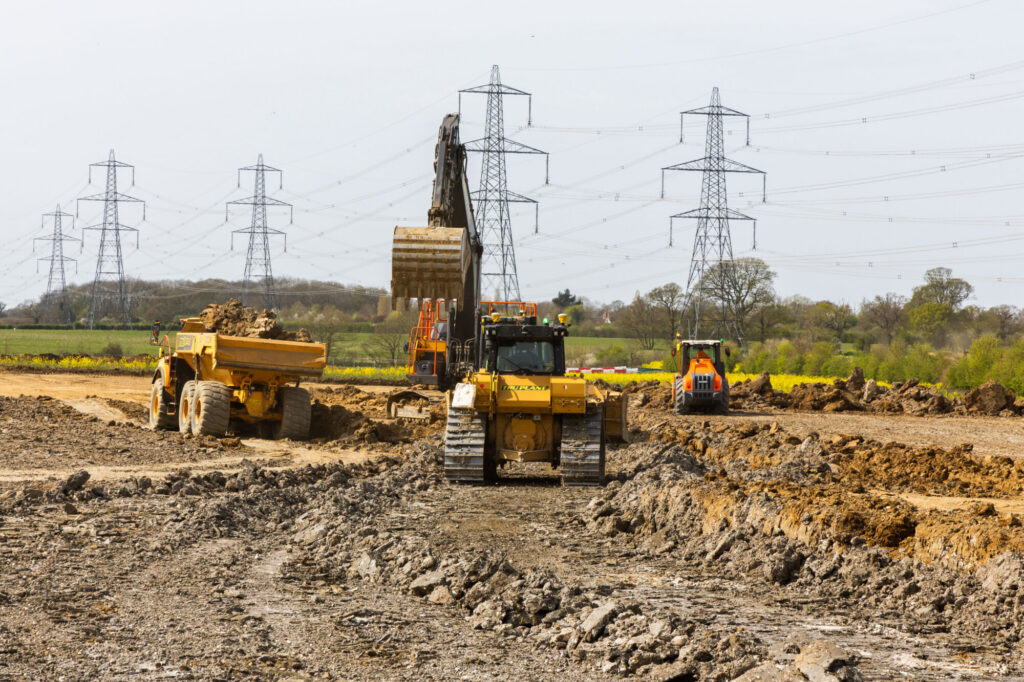
Earthworks projects often require several types of heavy construction machinery working together to excavate, transport, spread and compact materials. The equipment selected depends on the volume of material being moved, site access, ground conditions and overall project requirements.
Common earthworks machinery includes:
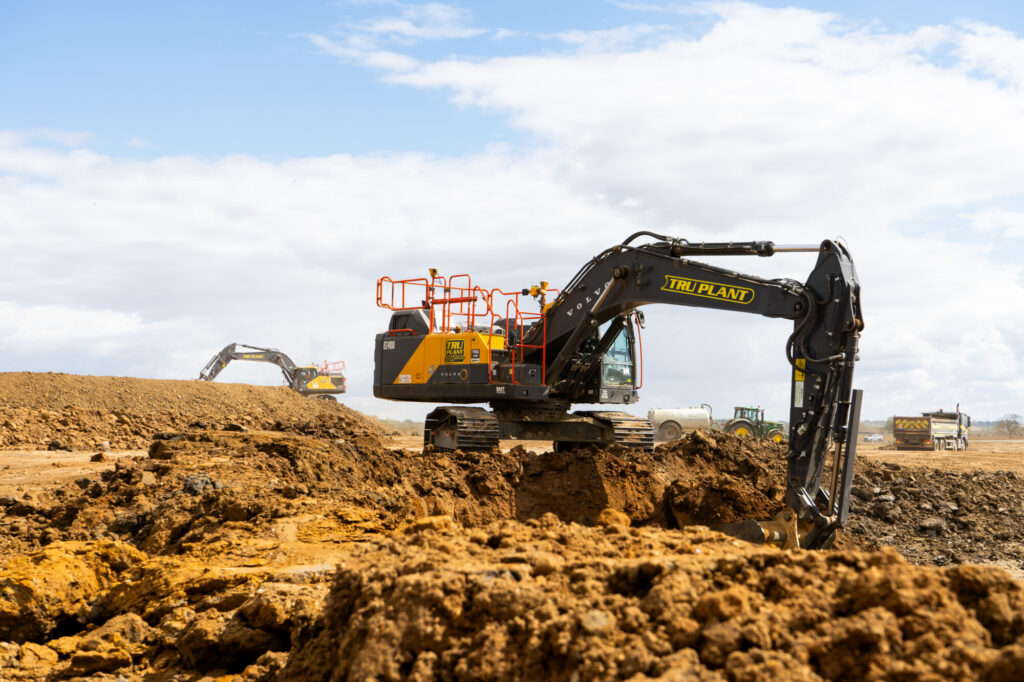
- Excavators: Used for digging, bulk excavation, loading and material handling.
- Articulated dump trucks (ADTs): Transport large quantities of excavated material across challenging site conditions.
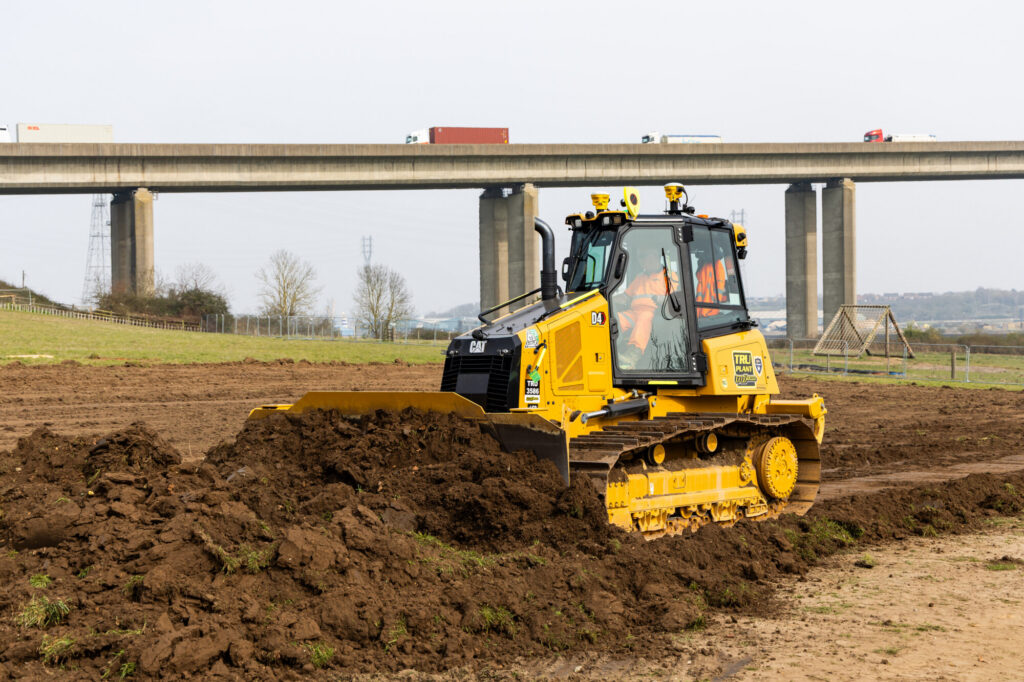
- Bulldozers: Push, spread and level material across construction sites.
- Motor graders: Create accurate ground profiles and finish prepared surfaces.
- Compaction rollers: Compact soil and fill materials to achieve the required density.
- Loading shovels: Load, transport and manage loose materials around a site.
- Tracked dumpers: Provide an alternative for transporting materials in restricted or soft-ground environments.
Modern earthmoving machinery can also incorporate GPS machine control and guidance technology, helping operators achieve accurate levels while reducing unnecessary material movement and reworking. Through Tru Plant, Tru7 Group has access to an extensive fleet of modern construction machinery, supporting the delivery of complex earthworks projects nationwide.
Why are earthworks important?
Earthworks play a crucial role in preparing sites for construction and helping ensure the long-term performance of the completed development. Poorly planned or executed earthworks can lead to programme delays, unnecessary costs and problems with ground stability or material management.Professional earthworks operations offer several important benefits.
Improved site preparation: Creating suitable ground levels and conditions for the next stages of construction.
Efficient material management: Reusing suitable excavated materials on site where possible, helping reduce waste and unnecessary transportation.
Greater project efficiency: Coordinating machinery, operators and material movements to maintain productivity.
Accurate ground levels: Using surveying and machine guidance technology to meet design specifications.
Reduced environmental impact: Minimising unnecessary material movements and making effective use of available resources.
For large-scale developments, selecting an experienced earthworks contractor can make a significant difference to overall project delivery.
What types of projects require earthworks?
Earthworks are required across a wide range of construction and civil engineering sectors. Typical applications include commercial and industrial developments, residential construction, highways, renewable energy infrastructure, flood alleviation schemes, agricultural reservoirs and sports facilities. For example, reservoir construction can involve excavating and relocating substantial volumes of earth to form storage basins and embankments.Similarly, large commercial developments may require extensive cut and fill operations to create suitable platforms for future buildings and infrastructure. Each project presents different challenges, making experienced operators, appropriate machinery and effective planning essential.
How do you choose an earthworks contractor?
Choosing the right earthworks contractor involves more than simply comparing machinery availability. Contractors must have the technical knowledge, equipment and operational capabilities to manage complex ground conditions, changing site requirements and substantial volumes of material. Before appointing a contractor, consider their experience delivering similar projects, the qualifications of their operators, machinery capabilities, health and safety procedures and approach to material management. It is also important to assess whether the contractor can support the full scope of the required earthworks package, from initial site preparation through to final grading and compaction. Working with a contractor that has access to its own extensive machinery fleet can also offer advantages in terms of resource coordination, flexibility and project delivery.
Earthworks Projects: Tru Earthworks in Action
Tru Earthworks has extensive experience delivering large-scale earthworks packages for major construction and infrastructure developments across the UK. A recent example is our £2.6 million bulk earthworks project in Corby, delivered for ECL Civils. The project involved approximately 600,000m³ of clay earthworks, extensive topsoil management and complex cut and fill operations across a 515,000m² site. Through efficient planning, material management and coordinated machinery operations, the team completed the works five weeks ahead of schedule.
Another example is our EA2 Friston project in Suffolk, delivered for Taylor Woodrow as part of the East Anglia TWO offshore wind farm development. Our team undertook approximately 150,000m³ of cut and fill operations and managed 50,000m³ of topsoil to prepare three major substation platforms. Working alongside other Tru7 Group divisions, the project also involved supplying approximately 65,000 tonnes of aggregates.Both projects demonstrate our ability to manage substantial volumes of material, coordinate large earthmoving fleets and deliver complex earthworks packages safely and efficiently.
Nationwide earthworks contractors: Tru Earthworks
Based in Suffolk and operating nationwide, Tru Earthworks provides specialist earthworks solutions for construction, commercial and infrastructure projects across the UK. Our experienced team delivers a comprehensive range of services, including bulk excavation, cut and fill, site clearance, muck shifting, soil stabilisation, remediation and large-scale material management. Supported by Tru7 Group's extensive fleet of modern construction machinery, we have the resources and technical expertise required to undertake demanding earthworks projects.From agricultural reservoirs and flood alleviation schemes to major commercial developments, our focus is on safe, efficient and accurate project delivery.
Explore our earthworks services or view our previous projects and case studies to learn more about our capabilities.
Discuss your earthworks requirements with Tru7
Whether you're planning a major construction development, infrastructure scheme or specialist earthmoving project, Tru Earthworks can provide the expertise, machinery and resources required to support your project.
Discover more about our nationwide earthworks services or contact the Tru7 Group team to discuss your requirements.